
Alexander Campolo
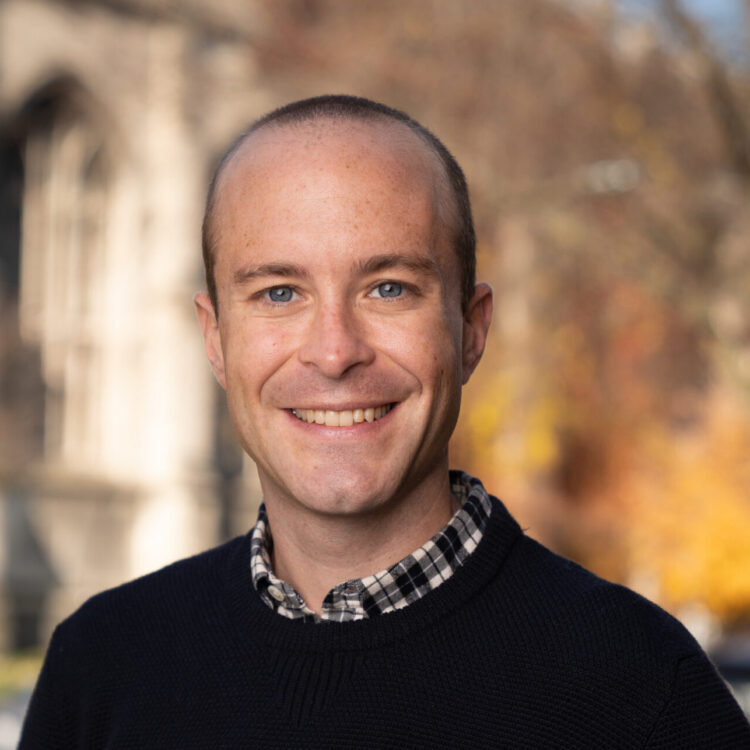
Alexander Campolo
Alexander Campolo is Assistant Professor (Research) at the Leverhulme Centre for Algorithmic Life and the School of Modern Languages & Cultures at Durham University. His research cuts across histories of machine learning, statistics, and computing to theorise societies and cultures being transformed by AI. At LCAL he will explore the question of generativity in a dual sense: as a scientific modelling culture that aims to estimate or represent data distributions and as a set of normative ideals for governing the behaviour of the people and things. This research begins within the history of machine learning in order to understand how certain architectures, tasks, and learning objectives shape the AI outputs we encounter in areas ranging from politics to healthcare. How for instance, do our conceptions of language transform when understood as a sequence modelling problem? His work then opens outward to social and cultural dimensions of generativity, asking how generative models are used to produce certain desired behaviours—by incorporating feedback, filtering training data, responding to benchmarks, or being directed by harnesses.
Prior to joining the Leverhulme Centre for Algorithmic Life, Alexander has held research positions at the AI Now Institute at New York University, the Institute on the Formation of Knowledge at the University of Chicago, and on the Algorithmic Societies Project in the Department of Geography at Durham University. His work has been published in leading outlets in history and the social sciences, including, Grey Room, The Journal for the History of Knowledge, Economy and Society, Big Data & Society, and AI & Society.